

What is the corrosion resistance of aluminum formwork panels?
In the realm of construction, aluminum formwork panels have emerged as a revolutionary alternative to traditional formwork materials. As a leading [Your Role] in [Relevant Area] of aluminum formwork panels, I've witnessed firsthand the growing demand for these innovative products. One of the most frequently asked questions from our clients is about the corrosion resistance of aluminum formwork panels. In this blog, I will delve into this topic, exploring the factors that contribute to the corrosion resistance of aluminum formwork panels, and why this characteristic is crucial in construction projects.
Understanding Aluminum's Natural Corrosion Resistance
Aluminum is a highly reactive metal, but it has a unique property that gives it excellent corrosion resistance. When aluminum is exposed to oxygen in the air, it forms a thin, transparent layer of aluminum oxide (Al₂O₃) on its surface. This oxide layer acts as a protective barrier, preventing further oxidation and corrosion of the underlying aluminum metal. The aluminum oxide layer is self - healing, meaning that if it is scratched or damaged, a new layer will quickly form in its place under normal atmospheric conditions.
The chemical reaction for the formation of aluminum oxide can be represented as follows:
4Al + 3O₂ → 2Al₂O₃
This natural protective layer gives aluminum formwork panels an inherent ability to resist corrosion, even in environments where other metals might rust or corrode rapidly.

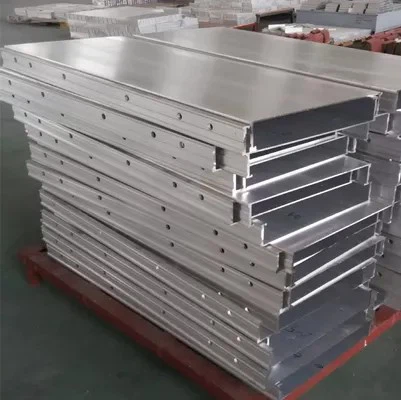
Factors Affecting the Corrosion Resistance of Aluminum Formwork Panels
While aluminum has natural corrosion - resistant properties, several factors can influence the effectiveness of this protection in the context of formwork panels.
1. Alloy Composition
Aluminum formwork panels are not made of pure aluminum. Instead, they are often alloyed with other elements such as copper, magnesium, silicon, and zinc. These alloying elements can improve the mechanical properties of the formwork, such as strength and hardness. However, they can also have an impact on corrosion resistance. For example, aluminum - copper alloys may be more susceptible to corrosion in certain environments compared to aluminum - magnesium alloys. Our company carefully selects the alloy composition for our aluminum formwork panels to balance mechanical performance and corrosion resistance.
2. Surface Treatment
Surface treatments can significantly enhance the corrosion resistance of aluminum formwork panels. Common surface treatments include anodizing and powder coating. Anodizing is an electrochemical process that thickens the natural aluminum oxide layer, making it more resistant to abrasion and corrosion. Powder coating involves applying a dry powder to the surface of the formwork and then baking it to form a durable, protective finish. This finish not only provides additional corrosion protection but also gives the formwork a more aesthetically pleasing appearance.
3. Environmental Conditions
The environment in which the aluminum formwork panels are used plays a crucial role in their corrosion resistance. In coastal areas, where the air contains high levels of salt, the formwork is more likely to be exposed to corrosive elements. Similarly, in industrial areas with high levels of pollutants, such as sulfur dioxide, the formwork may face increased corrosion risks. Our aluminum formwork panels are designed to withstand a wide range of environmental conditions, but in particularly harsh environments, additional protective measures may be required.
Importance of Corrosion Resistance in Construction
The corrosion resistance of aluminum formwork panels is of utmost importance in construction projects for several reasons.
1. Durability
Corrosion can significantly reduce the lifespan of formwork panels. When formwork corrodes, it loses its structural integrity, which can lead to issues such as deformation and cracking. This can compromise the quality of the concrete structure being formed. With high - quality corrosion - resistant aluminum formwork panels, construction companies can ensure that their formwork will last for many projects, reducing the need for frequent replacements and saving costs in the long run.
2. Cost - Effectiveness
Although corrosion - resistant aluminum formwork panels may have a higher upfront cost compared to some traditional formwork materials, the long - term cost savings are substantial. The reduced need for maintenance and replacement means that construction companies can achieve better cost - effectiveness over the life cycle of the formwork. Additionally, the durability of the formwork allows for more efficient use, as it can be reused multiple times without significant degradation.
3. Quality of Construction
Corrosion - resistant formwork panels contribute to the overall quality of the construction project. Since the formwork remains in good condition throughout the construction process, it can provide a stable and accurate mold for the concrete. This results in a smoother and more precise concrete finish, reducing the need for additional finishing work and improving the overall appearance and performance of the structure.
Applications of Aluminum Formwork Panels
Our aluminum formwork panels are widely used in various construction applications, including:
1. Aluminum Template Applications
Aluminum templates are commonly used for creating precise shapes and forms in concrete structures. They are ideal for projects where high - precision and repeatability are required, such as in the construction of high - rise buildings, bridges, and industrial structures. The corrosion resistance of our aluminum templates ensures that they can maintain their accuracy and shape over multiple uses.
2. Engineering Construction Aluminum Formwork
In engineering construction projects, such as dams, tunnels, and subways, the formwork needs to withstand harsh environmental conditions and heavy loads. Our engineering construction aluminum formwork panels are designed with high - strength alloys and advanced surface treatments to provide excellent corrosion resistance and structural performance.
3. Aluminum Formwork for House Construction
For house construction, aluminum formwork panels offer a fast, efficient, and cost - effective solution. The corrosion resistance of these panels ensures that they can be used in different climates, from humid coastal areas to dry inland regions, without significant deterioration. This makes them a popular choice for both single - family homes and multi - story residential buildings.
Conclusion
In conclusion, the corrosion resistance of aluminum formwork panels is a key factor that makes them a superior choice in the construction industry. Through a combination of aluminum's natural protective properties, careful alloy selection, and advanced surface treatments, our aluminum formwork panels can resist corrosion in a wide range of environmental conditions. This corrosion resistance not only enhances the durability and cost - effectiveness of the formwork but also contributes to the overall quality of construction projects.
If you are interested in learning more about our aluminum formwork panels or have a project that requires high - quality formwork solutions, please feel free to contact us for procurement and negotiation. We are committed to providing you with the best products and services to meet your construction needs.
References
- Davies, C. L. (1999). Principles of Corrosion Engineering and Corrosion Control. Elsevier.
- Fontana, M. G. (1986). Corrosion Engineering. McGraw - Hill.
- Roberge, P. R. (2006). Corrosion Basics: An Introduction. NACE International.