

As a leading supplier of aluminum formwork, I've witnessed firsthand the growing popularity of this construction material in the industry. One of the most frequently asked questions about aluminum formwork is its corrosion resistance. In this blog post, I'll delve into the details of what corrosion resistance means for aluminum formwork, how it is achieved, and why it matters in construction projects.
Understanding Corrosion and Its Impact on Aluminum Formwork
Corrosion is a natural process that occurs when a metal reacts with its environment, typically oxygen and moisture, leading to the deterioration of the metal's surface. For aluminum formwork, corrosion can pose significant challenges. It can weaken the structural integrity of the formwork, reduce its lifespan, and compromise the quality of the concrete structures it helps to create. When formwork corrodes, it may develop rough surfaces, which can transfer to the concrete finish, resulting in an uneven or poor-quality appearance.
The Natural Corrosion Resistance of Aluminum
Aluminum has a unique property that gives it inherent corrosion resistance. When aluminum is exposed to air, it forms a thin, transparent oxide layer on its surface. This layer, known as aluminum oxide (Al₂O₃), acts as a protective barrier between the metal and the surrounding environment. The aluminum oxide layer is self - healing, meaning that if it is scratched or damaged, it will reform in the presence of oxygen, continuing to protect the underlying aluminum.
This natural corrosion resistance makes aluminum formwork a suitable choice for a wide range of construction environments. Whether it's a coastal area with high humidity and salt in the air or an industrial site with potentially corrosive chemicals, aluminum formwork can withstand these conditions better than many other materials.
Factors Affecting the Corrosion Resistance of Aluminum Formwork
While aluminum has natural corrosion resistance, several factors can influence how well it resists corrosion in real - world applications:
1. Alloy Composition
The type of aluminum alloy used in the formwork plays a crucial role in its corrosion resistance. Different alloys contain varying amounts of other elements such as copper, magnesium, silicon, and zinc. For example, alloys with higher magnesium content tend to have better corrosion resistance in some environments. At our company, we carefully select the appropriate aluminum alloys for our Engineering Construction Aluminum Formwork to ensure optimal performance in different construction scenarios.
2. Surface Finish
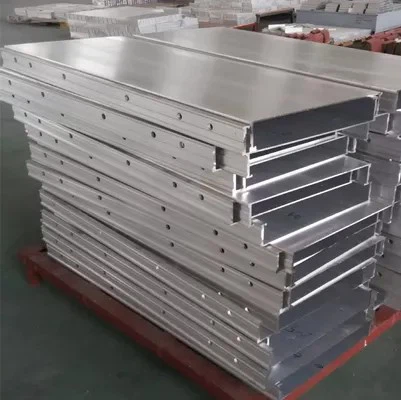
The surface finish of the aluminum formwork can significantly impact its corrosion resistance. A smooth, clean surface is less likely to trap moisture and contaminants, which can initiate corrosion. We offer Aluminum Formwork Panel with different surface finishes, including anodized finishes. Anodizing is an electrochemical process that thickens the natural aluminum oxide layer, providing enhanced protection against corrosion. It also gives the formwork a more uniform and aesthetically pleasing appearance.
3. Environmental Conditions
The construction environment is a major factor in determining the corrosion rate of aluminum formwork. High humidity, saltwater exposure, and the presence of acidic or alkaline substances can accelerate corrosion. In coastal regions, the salt in the air can break down the aluminum oxide layer more quickly, increasing the risk of corrosion. On the other hand, in a dry, clean indoor environment, the formwork will experience less corrosion.
4. Contact with Other Metals
When aluminum formwork comes into contact with other metals, especially those that are more noble (such as copper or stainless steel) in the galvanic series, a galvanic cell can be formed. This can lead to accelerated corrosion of the aluminum. To prevent this, we ensure that proper insulation or separation is used when aluminum formwork is in contact with other metals during construction.
Testing and Ensuring Corrosion Resistance
To guarantee the corrosion resistance of our aluminum formwork, we conduct a series of tests. Salt spray tests are commonly used to simulate the effects of a coastal environment. In a salt spray test, the formwork samples are exposed to a fine mist of saltwater for a specified period. After the test, the samples are examined for signs of corrosion, such as rust spots or pitting.
We also perform immersion tests in different chemical solutions to evaluate the formwork's resistance to various corrosive substances. These tests help us to select the most suitable alloys and surface treatments for our Aluminum Formwork for Concrete.
Benefits of Corrosion - Resistant Aluminum Formwork
1. Longevity
Corrosion - resistant aluminum formwork has a longer lifespan compared to other materials. This means that construction companies can reuse the formwork multiple times, reducing the overall cost of construction projects. With proper maintenance, our aluminum formwork can last for many years, providing a cost - effective solution for repeated use.
2. Quality of Concrete Structures
When the formwork is corrosion - resistant, it maintains its shape and smooth surface over time. This results in better - quality concrete structures with a smooth finish. The formwork does not transfer corrosion - related defects to the concrete, ensuring that the final construction meets the highest standards.
3. Reduced Maintenance
Corrosion - resistant aluminum formwork requires less maintenance. There is no need for frequent painting or coating to protect it from rust. This saves time and money during the construction process and also reduces the environmental impact associated with maintenance activities.

How to Maximize the Corrosion Resistance of Aluminum Formwork on Site
On the construction site, there are several steps that can be taken to maximize the corrosion resistance of aluminum formwork:
1. Proper Storage
Aluminum formwork should be stored in a dry, well - ventilated area. If it is stored outdoors, it should be covered to protect it from rain and direct sunlight. Avoid storing the formwork on the ground, as moisture can accumulate beneath it.
2. Regular Cleaning
Regular cleaning of the formwork is essential. After each use, the formwork should be cleaned to remove any concrete residues, dirt, or other contaminants. This helps to prevent the build - up of substances that could potentially cause corrosion.
3. Inspection
Regular inspections should be carried out to check for any signs of corrosion or damage. If any damage is found, it should be repaired immediately to prevent further corrosion.
Conclusion
The corrosion resistance of aluminum formwork is a key advantage that makes it a preferred choice in the construction industry. Its natural ability to form a protective oxide layer, combined with proper alloy selection, surface treatment, and on - site care, ensures that it can withstand a variety of harsh environments.
As a supplier of high - quality aluminum formwork, we are committed to providing products with excellent corrosion resistance. Our Engineering Construction Aluminum Formwork, Aluminum Formwork Panel, and Aluminum Formwork for Concrete are designed and manufactured to meet the highest standards of quality and performance.
If you are involved in a construction project and are considering using aluminum formwork, we invite you to contact us for more information. Our team of experts can provide you with detailed product specifications, technical support, and help you select the right formwork for your specific needs. Let's work together to ensure the success of your construction project with our corrosion - resistant aluminum formwork.
References
- ASM Handbook, Volume 13A: Corrosion: Fundamentals, Testing, and Protection. ASM International.
- Aluminum Association. Aluminum Design Manual.
- NACE International. Corrosion Basics: An Introduction.