

Hey there! I'm a supplier of steel products, and I've been in this industry for quite a while. Today, I'm gonna talk about the raw materials for making steel products. It's super important to understand what goes into these products, whether you're in the construction business, manufacturing, or just curious about how things are made.
The Basics of Steel Production
Let's start with the very basics. Steel is an alloy, which means it's a mixture of different elements. The main ingredient is iron, and then there are other elements added to give it specific properties. The process of making steel is a complex one, but at its core, it involves turning raw materials into a strong and versatile metal that we use in countless applications.
Iron Ore
The primary raw material for steelmaking is iron ore. Iron ore is a rock that contains iron oxides. There are different types of iron ore, but the most common ones are hematite and magnetite. These ores are mined from the earth in large quantities.
Mining companies use various methods to extract iron ore. Once it's mined, the ore is crushed and processed to remove impurities. This results in a concentrated iron ore product, which is then ready for the next step in the steelmaking process.
The quality of the iron ore can vary significantly. Higher-quality ores have a higher iron content, which means less energy and resources are needed to produce steel. As a steel product supplier, I always keep an eye on the quality of the iron ore used in the production of the steel we offer.
Coal and Coke
Coal plays a crucial role in steelmaking. It's not used directly in the final product, but it's essential for the process. Coal is heated in an oxygen-free environment to produce coke. Coke is a porous, carbon-rich material that has several important functions in the steelmaking process.
First of all, coke is used as a fuel. It provides the heat needed to melt the iron ore and other raw materials in the blast furnace. Secondly, coke acts as a reducing agent. It helps to remove the oxygen from the iron ore, leaving behind pure iron.
The type of coal used to make coke is important. Coking coal has specific properties that make it suitable for this process. As a supplier, I know that the quality of the coke can affect the quality of the steel produced. That's why we work with reliable suppliers who can provide high-quality coking coal.
Limestone
Limestone is another important raw material in steelmaking. It's added to the blast furnace along with the iron ore and coke. Limestone has several functions in the process.
One of the main functions of limestone is to remove impurities from the iron ore. When heated in the blast furnace, limestone decomposes into calcium oxide (quicklime). The quicklime then reacts with the impurities in the iron ore, such as silica and alumina, to form slag. Slag is a waste product that floats on top of the molten iron and can be easily removed.

Limestone also helps to control the temperature and chemical reactions in the blast furnace. It plays a crucial role in ensuring that the steelmaking process runs smoothly and efficiently.
Scrap Steel
Scrap steel is recycled steel that can be used as a raw material in the production of new steel products. It's an important part of the steel industry because it helps to conserve natural resources and reduce energy consumption.
There are different sources of scrap steel. It can come from old buildings, vehicles, machinery, and other steel products that have reached the end of their useful life. Scrap steel is collected, sorted, and processed before being used in the steelmaking process.
Using scrap steel has several advantages. It's often cheaper than using virgin iron ore and other raw materials. It also reduces the environmental impact of steel production. As a steel product supplier, I'm a big fan of using scrap steel. It allows us to offer high-quality steel products at a competitive price while also being environmentally responsible.
Other Elements in Steel
In addition to the main raw materials mentioned above, there are other elements that can be added to steel to give it specific properties. These elements are called alloying elements.
Manganese
Manganese is one of the most common alloying elements in steel. It helps to improve the strength and hardness of the steel. Manganese also acts as a deoxidizer, which means it helps to remove oxygen from the steel during the production process. This results in a cleaner and more homogeneous steel product.
Chromium
Chromium is added to steel to make it corrosion-resistant. Stainless steel, for example, contains a significant amount of chromium. Chromium forms a thin, protective layer on the surface of the steel, which prevents it from rusting and corroding. This makes stainless steel ideal for applications where corrosion resistance is important, such as in the food industry, architecture, and automotive manufacturing.
Nickel
Nickel is another alloying element that can be added to steel. It helps to improve the toughness and ductility of the steel. Nickel also enhances the corrosion resistance of the steel, especially in acidic environments. Steel products that contain nickel are often used in high-performance applications, such as aerospace and marine engineering.
Vanadium
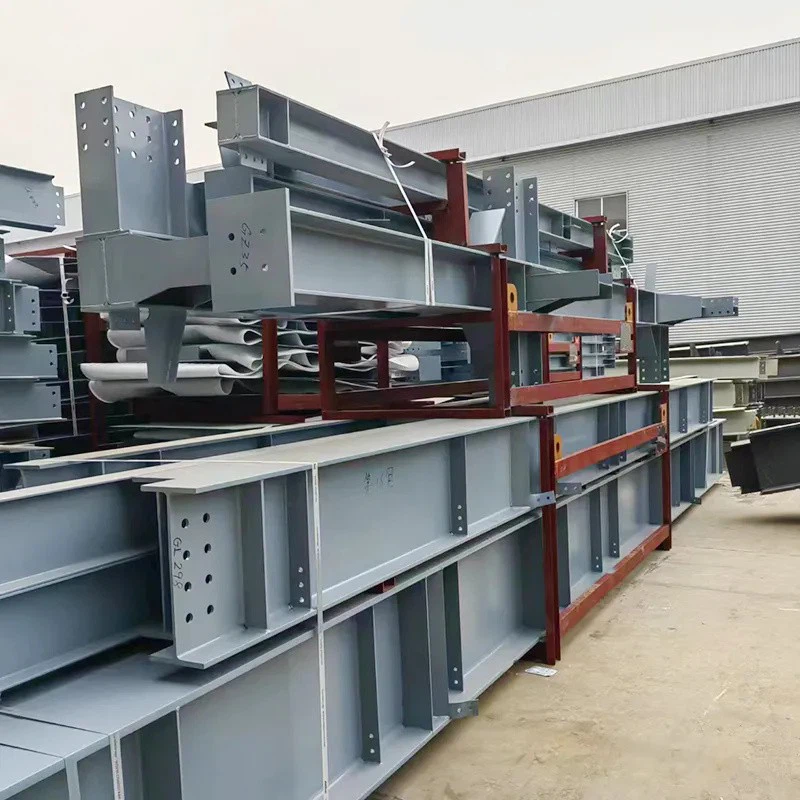
Vanadium is a relatively rare element, but it can have a significant impact on the properties of steel. It helps to increase the strength and hardness of the steel, especially at high temperatures. Vanadium is often used in the production of high-strength steel products, such as H Steel Beam and H Beam, which are used in construction and engineering.
The Importance of Raw Materials for Steel Product Suppliers
As a steel product supplier, I know that the quality of the raw materials used in the production of steel products is crucial. The raw materials determine the properties and performance of the final product. That's why we work closely with our suppliers to ensure that we get the best quality raw materials.
We also keep an eye on the market prices of the raw materials. The prices of iron ore, coal, and other raw materials can fluctuate significantly, which can affect the cost of producing steel products. By staying informed about the market trends, we can make informed decisions about our purchasing and pricing strategies.
Conclusion
In conclusion, the raw materials for making steel products are diverse and play a crucial role in the steelmaking process. Iron ore, coal, limestone, and scrap steel are the main raw materials, while alloying elements such as manganese, chromium, nickel, and vanadium are added to give the steel specific properties.
As a steel product supplier, I'm committed to providing high-quality steel products to my customers. By understanding the importance of raw materials and working with reliable suppliers, I can ensure that the steel products we offer meet the highest standards of quality and performance.
If you're interested in purchasing steel products, whether it's H Steel Beam, H Beam, or other types of steel products, feel free to reach out to me. I'd be more than happy to discuss your requirements and provide you with a competitive quote. Let's work together to find the perfect steel solution for your project!
References
- "The Making, Shaping and Treating of Steel" - Association for Iron & Steel Technology
- "Steel: Metallurgy and Applications" - George E. Totten, Van A. MacKenzie