

Hey there! As a supplier of H Steel Beam, I've been in the steel business for quite some time now. And let me tell you, quality control during H Steel Beam production is no joke. It's a crucial process that ensures we're delivering top-notch products to our customers. So, let's dive into the major quality control points in H Steel Beam production.
Raw Material Inspection
The whole production process starts with the raw materials. We can't make high - quality H Steel Beams without high - quality steel. That's why we always start with a thorough inspection of the raw materials.
First of all, we check the chemical composition of the steel. The percentages of elements like carbon, silicon, manganese, sulfur, and phosphorus can greatly affect the properties of the H Beam. For example, carbon increases the strength of the steel, but too much carbon can make it brittle. So, we make sure that the chemical composition meets the relevant standards and the requirements of the specific H Steel Beam we're manufacturing.
Secondly, we look at the physical properties of the raw materials. This includes things like the tensile strength, yield strength, and elongation. We use testing equipment to measure these properties accurately. If the raw materials don't meet the required physical property standards, they're not going to be suitable for making H Steel Beams that can withstand the loads and stresses they'll be subjected to in real - world applications.
Cutting and Shaping
Once the raw materials pass the inspection, it's time to start cutting and shaping them into the H - beam form. This is another critical stage where quality control is essential.
For the cutting process, we pay close attention to the cutting accuracy. The dimensions of the H Steel Beam need to be precise. If the cuts are off by even a small margin, it can affect how well the beam fits into the construction project. For example, if the length of the beam is too short or too long, it can cause problems during installation.
When it comes to shaping, we ensure that the H - beam has the correct cross - sectional shape. The flanges and the web of the H Beam should be of the right thickness and width, and they should be properly aligned. Any deviation in the shape can lead to uneven stress distribution in the beam, which can compromise its structural integrity. We use advanced machinery and tools to ensure that the shaping process is carried out precisely.
Welding Quality
In most cases, H Steel Beams are made by welding the flanges and the web together. Welding is a key step in the production process, and welding quality is a major quality control point.
We start by selecting the appropriate welding method and materials. Different welding methods, such as submerged arc welding or gas metal arc welding, have their own advantages and are suitable for different types of H Steel Beams. The welding electrodes or wires also need to be compatible with the base metal to ensure a strong and durable weld.
During the welding process, we monitor the welding parameters closely. Things like the welding current, voltage, and welding speed can all affect the quality of the weld. If these parameters are not set correctly, it can lead to defects such as porosity, cracks, or lack of fusion. We also conduct regular visual inspections of the welds to check for any obvious defects.
After the welding is complete, we use non - destructive testing methods, such as ultrasonic testing or magnetic particle testing, to detect any internal defects in the welds that are not visible to the naked eye. If any defects are found, we take immediate measures to correct them, such as re - welding or repairing the affected areas.
Heat Treatment
Heat treatment is often carried out to improve the mechanical properties of the H Steel Beam. This is another area where strict quality control is necessary.
The heat treatment process involves heating the H Beam to a specific temperature and then cooling it at a controlled rate. The heating temperature, the holding time at that temperature, and the cooling rate all need to be carefully controlled. If the heat treatment is not done correctly, it can lead to issues such as uneven hardness, residual stress, or distortion of the beam.
We use temperature sensors and control systems to ensure that the heat treatment process is carried out precisely according to the specified parameters. After the heat treatment, we test the mechanical properties of the H Steel Beam again to make sure that the treatment has achieved the desired results.
Surface Treatment
The surface treatment of H Steel Beams is not only about aesthetics but also about protecting the beam from corrosion.
We first clean the surface of the H Beam to remove any rust, scale, or dirt. This is usually done by methods such as shot blasting or chemical cleaning. A clean surface is essential for the subsequent coating process.
For the coating, we choose the appropriate type of coating material based on the environment where the H Beam will be used. For example, if the beam will be exposed to a corrosive environment, we might use a high - performance anti - corrosion coating. The thickness of the coating is also an important factor. We use coating thickness gauges to ensure that the coating is applied evenly and has the required thickness.

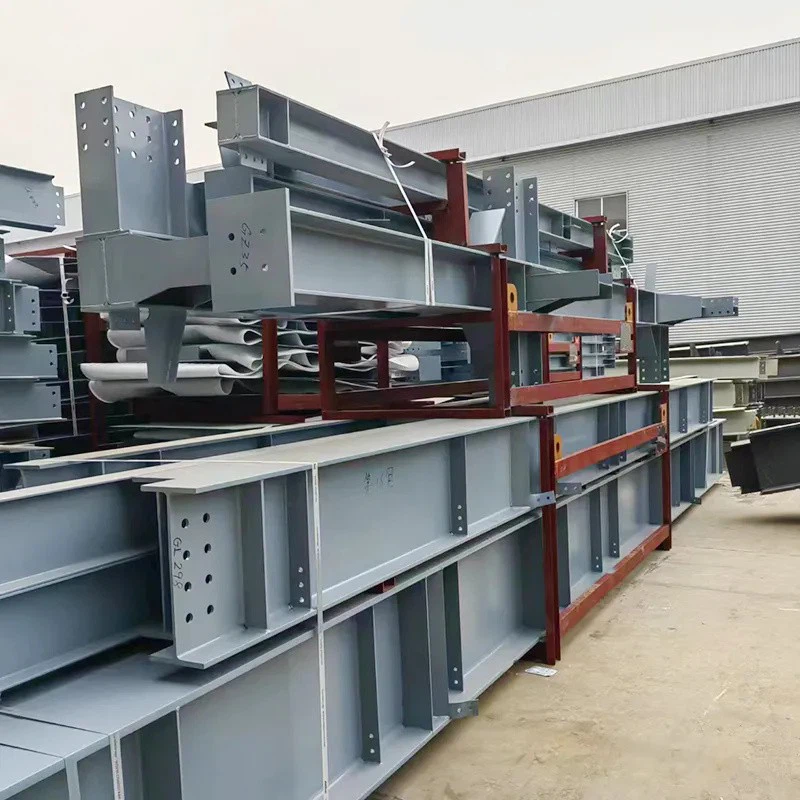
Final Inspection
Before shipping the H Steel Beams to our customers, we conduct a final inspection. This is a comprehensive check to make sure that the beam meets all the quality requirements.
We re - check the dimensions of the H Beam to ensure that they are within the specified tolerances. We also conduct a final visual inspection to look for any surface defects that might have been missed during the previous inspections, such as scratches or dents.
In addition, we review all the test reports and inspection records from each stage of the production process to make sure that the beam has passed all the quality control points. Only after the H Steel Beam passes the final inspection can it be approved for shipment.
Why Quality Control Matters
You might be wondering, why all these quality control points are so important? Well, for starters, high - quality H Steel Beams are essential for the safety and stability of construction projects. Whether it's a high - rise building, a bridge, or an industrial facility, the H Steel Beams need to be able to support the loads and stresses without failing.
Secondly, by maintaining strict quality control, we can build a good reputation in the market. Customers are more likely to trust and do business with a supplier who consistently delivers high - quality products. It also helps us avoid costly returns and re - work, which can save both time and money in the long run.
Let's Talk Business
If you're in the market for H Steel Beams or H Beams, I'd love to have a chat with you. We take pride in our quality control processes and are confident that we can provide you with H Steel Beams that meet your specific needs and requirements. Whether you need a small quantity for a DIY project or a large order for a major construction project, we're here to help. Reach out to us, and let's start discussing your procurement needs.
References
- Steel Construction Manual, American Institute of Steel Construction
- Welding Handbook, American Welding Society
- Standards for Steel Products, International Organization for Standardization