

As a seasoned supplier of steel products, I'm thrilled to take you on a journey through the intricate production processes of stainless steel products. Stainless steel, renowned for its corrosion resistance, durability, and aesthetic appeal, is a versatile material used in a wide range of industries, from construction to automotive and beyond. In this blog, I'll break down the key steps involved in manufacturing stainless steel products, providing you with a comprehensive understanding of how these remarkable items are brought to life.
Step 1: Raw Material Selection
The production of stainless steel products begins with the careful selection of raw materials. Stainless steel is an alloy primarily composed of iron, chromium, nickel, and other elements. The specific composition of the alloy determines the properties of the final product, such as its corrosion resistance, strength, and ductility. As a supplier, we source high-quality raw materials from trusted suppliers to ensure the consistency and quality of our stainless steel products.
Step 2: Melting and Refining
Once the raw materials are selected, they are melted in a furnace at extremely high temperatures, typically around 1,600°C (2,912°F). This process, known as melting, transforms the solid raw materials into a molten state. During melting, various additives may be introduced to adjust the composition of the alloy and achieve the desired properties.
After melting, the molten steel undergoes a refining process to remove impurities and unwanted elements. This is typically done using a combination of techniques, including oxygen blowing, vacuum degassing, and ladle metallurgy. Refining helps to improve the purity and quality of the steel, ensuring that it meets the strict standards required for various applications.
Step 3: Casting
Once the molten steel has been refined, it is ready to be cast into the desired shape. There are several casting methods used in the production of stainless steel products, including continuous casting, ingot casting, and die casting.
Continuous casting is the most common method used for producing long, continuous shapes such as bars, rods, and sheets. In this process, the molten steel is poured into a water-cooled mold, where it solidifies into a continuous strand. The strand is then cut into the desired lengths and further processed.
Ingot casting, on the other hand, is used for producing large, heavy-duty components such as billets, blooms, and slabs. In this process, the molten steel is poured into a large mold and allowed to solidify. The ingot is then removed from the mold and further processed through rolling, forging, or other methods.
Die casting is a specialized casting method used for producing complex, high-precision components with intricate shapes. In this process, the molten steel is injected into a die under high pressure, where it solidifies into the desired shape. Die casting is commonly used in the automotive and aerospace industries for producing parts such as engine blocks, transmission cases, and turbine blades.
Step 4: Forming and Fabrication
After casting, the stainless steel products are typically subjected to a series of forming and fabrication processes to achieve the final shape and dimensions. These processes may include rolling, forging, extrusion, machining, welding, and bending.
Rolling is a common forming process used for producing flat products such as sheets, plates, and strips. In this process, the cast steel is passed through a series of rollers to reduce its thickness and increase its length. Rolling can be done at room temperature (cold rolling) or at elevated temperatures (hot rolling), depending on the desired properties of the final product.
Forging is a process of shaping metal by applying compressive forces using a hammer or a press. Forging is commonly used for producing high-strength components such as shafts, gears, and connecting rods. The forging process helps to improve the mechanical properties of the steel by aligning the grain structure and eliminating internal defects.
Extrusion is a process of forcing the cast steel through a die to produce long, continuous shapes with a constant cross-section. Extrusion is commonly used for producing tubes, pipes, and profiles. The extrusion process allows for the production of complex shapes with high precision and excellent surface finish.

Machining is a process of removing material from the stainless steel product using cutting tools such as drills, lathes, and mills. Machining is commonly used for producing parts with precise dimensions and complex geometries. The machining process can be done using conventional machining methods or advanced CNC (Computer Numerical Control) machining techniques.
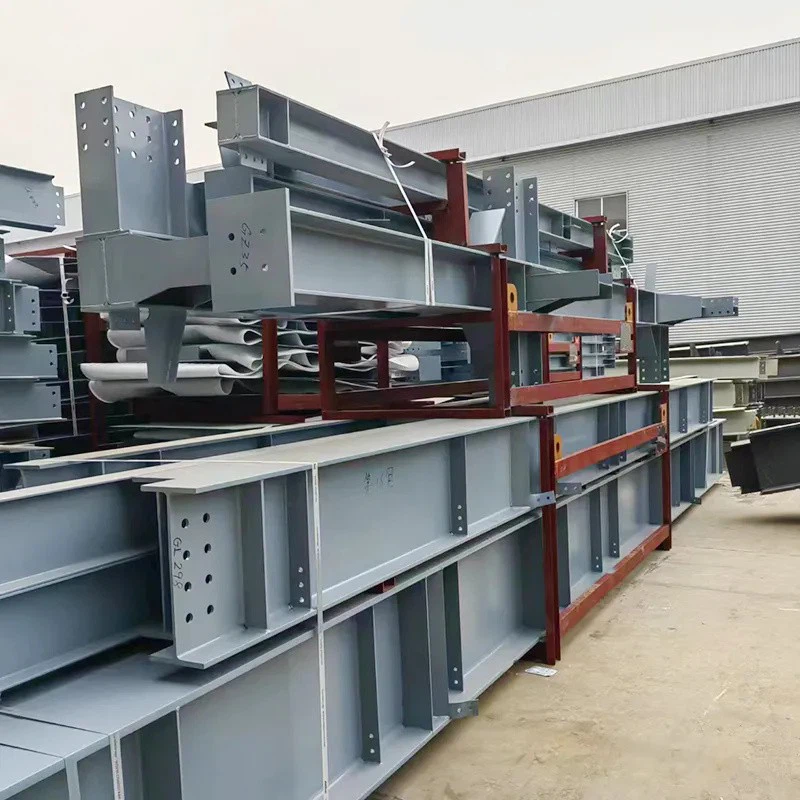
Welding is a process of joining two or more pieces of stainless steel together using heat and pressure. Welding is commonly used for fabricating large structures such as buildings, bridges, and ships. There are several welding methods available, including arc welding, gas welding, and resistance welding. The choice of welding method depends on the type of stainless steel, the thickness of the material, and the application requirements.
Bending is a process of shaping the stainless steel product by applying a force to it. Bending is commonly used for producing curved or angled parts such as pipes, tubes, and frames. The bending process can be done using a variety of tools and techniques, including press brakes, rollers, and mandrels.
Step 5: Heat Treatment
After forming and fabrication, the stainless steel products may be subjected to a heat treatment process to improve their mechanical properties and corrosion resistance. Heat treatment involves heating the product to a specific temperature and then cooling it at a controlled rate. There are several heat treatment processes available, including annealing, quenching, tempering, and precipitation hardening.
Annealing is a heat treatment process that involves heating the stainless steel product to a high temperature and then cooling it slowly. Annealing helps to relieve internal stresses, improve the ductility and toughness of the steel, and reduce its hardness. Annealing is commonly used for preparing the steel for further processing or for improving its machinability.
Quenching is a heat treatment process that involves heating the stainless steel product to a high temperature and then cooling it rapidly. Quenching helps to increase the hardness and strength of the steel by forming a martensitic structure. Quenching is commonly used for producing high-strength components such as springs, gears, and shafts.
Tempering is a heat treatment process that involves heating the quenched stainless steel product to a lower temperature and then cooling it slowly. Tempering helps to reduce the brittleness of the steel and improve its toughness and ductility. Tempering is commonly used after quenching to balance the hardness and toughness of the steel.
Precipitation hardening is a heat treatment process that involves heating the stainless steel product to a specific temperature and then holding it at that temperature for a period of time. Precipitation hardening helps to increase the strength and hardness of the steel by forming fine precipitates within the microstructure. Precipitation hardening is commonly used for producing high-strength components such as aircraft parts, automotive components, and medical devices.
Step 6: Surface Treatment
After heat treatment, the stainless steel products may be subjected to a surface treatment process to improve their appearance, corrosion resistance, and wear resistance. Surface treatment involves applying a coating or a finish to the surface of the product. There are several surface treatment methods available, including polishing, plating, painting, and powder coating.
Polishing is a process of smoothing the surface of the stainless steel product using abrasive materials. Polishing helps to improve the appearance of the product by giving it a shiny, reflective finish. Polishing can be done using a variety of techniques, including mechanical polishing, chemical polishing, and electropolishing.
Plating is a process of depositing a thin layer of metal onto the surface of the stainless steel product using an electrochemical process. Plating helps to improve the corrosion resistance and wear resistance of the product by providing a protective barrier between the steel and the environment. Common plating materials include chromium, nickel, and zinc.
Painting is a process of applying a layer of paint to the surface of the stainless steel product using a brush, spray gun, or roller. Painting helps to improve the appearance of the product and provide additional protection against corrosion and wear. There are several types of paints available, including epoxy paints, polyurethane paints, and acrylic paints.
Powder coating is a process of applying a dry powder to the surface of the stainless steel product using an electrostatic charge. The powder is then heated to a high temperature, where it melts and forms a smooth, durable coating. Powder coating helps to improve the corrosion resistance, wear resistance, and appearance of the product. Powder coating is commonly used in the automotive, furniture, and appliance industries.
Step 7: Quality Control
Throughout the production process, strict quality control measures are implemented to ensure that the stainless steel products meet the highest standards of quality and performance. Quality control involves inspecting and testing the products at various stages of production to ensure that they meet the specified requirements.
Inspection methods may include visual inspection, dimensional inspection, non-destructive testing (NDT), and mechanical testing. Visual inspection involves examining the product for surface defects such as cracks, scratches, and porosity. Dimensional inspection involves measuring the dimensions of the product to ensure that they are within the specified tolerances. Non-destructive testing involves using techniques such as ultrasonic testing, magnetic particle testing, and radiographic testing to detect internal defects such as cracks and voids. Mechanical testing involves testing the product for its strength, hardness, ductility, and other mechanical properties.
In addition to in-house quality control measures, we also work closely with independent third-party testing laboratories to ensure the reliability and accuracy of our quality control processes. By implementing strict quality control measures, we are able to provide our customers with high-quality stainless steel products that meet their specific requirements and expectations.
Conclusion
The production of stainless steel products is a complex and multi-step process that involves careful selection of raw materials, melting and refining, casting, forming and fabrication, heat treatment, surface treatment, and quality control. Each step in the process plays a crucial role in determining the final properties and performance of the stainless steel products.
As a leading supplier of steel products, we are committed to providing our customers with high-quality stainless steel products that meet the highest standards of quality and performance. We have a state-of-the-art manufacturing facility equipped with the latest technology and equipment, and a team of experienced and skilled professionals who are dedicated to producing the best possible products.
If you are interested in purchasing stainless steel products for your next project, I encourage you to [contact us] to discuss your specific requirements. Our team of experts will be happy to assist you in selecting the right product for your application and providing you with a competitive quote. We look forward to working with you and helping you achieve your goals.
References
- ASM Handbook, Volume 1: Properties and Selection: Irons, Steels, and High-Performance Alloys. ASM International, 1990.
- Metals Handbook, Volume 2: Properties and Selection: Nonferrous Alloys and Special-Purpose Materials. ASM International, 1990.
- Stainless Steel: A Practical Guide. ASM International, 2000.
- Welding of Stainless Steels and Other Joining Methods. ASM International, 2000.